
Let me set the scene. A few months ago, I found myself at an investor summit in New York, put on by one of the biggest names in the legal world. I walked into a room full of private equity players and a handful of plaintiff personal injury firms who had been, let's just say, strategically invited. The energy in that room was unmistakable. Law firms were the product being evaluated, sized up, and courted. And I would not have needed my flight reimbursed if someone had handed me a dollar every time a PE investor said the words "attractive firm."
That experience confirmed something we had already been seeing at Vista for a while. The calls coming into our office have shifted. Not long ago, firms called us because they had hit a growth wall, realized their founder-led operation had some serious cracks, and needed help getting operations, accountability, and infrastructure in order. That work has not gone away. But now? Now we are also fielding calls from firms asking about private equity, MSO structures, what their options are, and how to make themselves more appealing if and when a buyer comes knocking. We are even getting calls from PE firms themselves.
So let us just say it plainly: capital has entered the plaintiff personal injury space, and it is not going anywhere.
I know this is a polarizing topic in our industry. There are passionate people on both sides, and I understand why. But I am going to be honest with you, the way I always am: spending your energy debating whether private equity in PI is good or bad is not particularly useful. It is here. The ground is shifting. And the firms that will thrive in this environment are not the ones arguing about it on a conference panel…they are the ones getting their houses in order.
What does "in order" look like? Funny you should ask. It looks a lot like what Vista has been telling firms for more than 15 years.
Here is an uncomfortable truth in the plaintiff PI world: a lot of firms are not actually businesses. They are founder personalities with a legal license and a team trying to keep up. The firm runs because the owner is in the office. Decisions happen because the owner is reachable. The culture, the intake criteria, the case strategy, the vendor relationships… all of it lives in one person's head.
That is not a business. That is a one-person show with employees.
Private equity investors know the difference immediately. When they evaluate a firm, they are not just looking at revenue. They are asking a very pointed question: What happens if the founding attorney goes on a two-week vacation to Mexico and does not check their phone? If the honest answer is "everything slows down or stops," that is a problem. Not just for a potential investor but for you, right now, today.
The firms that are attractive in a capital environment are the ones where leadership is a team sport. Where there is a real management structure that can make good decisions without the owner in the room. Where team members know what they are doing and why, and processes do not fall apart when the founder is not hovering.
We have always said this. We will keep saying it until we are hoarse. But the financialization of PI has given this message some new urgency.
When a PE firm or a strategic buyer starts doing diligence on your firm, they are not impressed by your trial record alone. They want to see your operations. They want to understand your intake process, case management workflow, staff retention, conversion rates, and how you handle escalations when something goes wrong. They want to know whether your firm runs on documented, repeatable systems or on institutional knowledge that lives in the brains of three people who might leave next year.
Trust me when I say: we have been in the trenches with firms going through acquisition conversations, and watching them try to pull together basic operational information from the depths of old software and convert it into spreadsheets at the last minute is not pretty. It is stressful, and it costs them leverage at exactly the wrong moment.
Operational discipline is what separates a firm that can survive a transaction from a firm that gets a low offer, or no offer at all.
If there is one thing that makes a buyer, any buyer, nervous, it is dirty data and inconsistent reporting. And if I had a nickel for every firm that could not produce a clean financial package on demand, I would have a lot of nickels.
Here is what investors want to see: financials that tell a clear, believable story. Revenue trends. Expense categories that make sense. Case inventory by stage. Time on desk. Settlement velocity. They want to look at your numbers and trust them. They do not want to wonder which spreadsheet is the right one, or why the CMS says one thing and the accountant says another.
Sophisticated firms have one source of truth. That means your data is clean, your reporting is consistent, and when someone asks you a question about your firm's performance, you can answer it with confidence not with "let me check with three different people and get back to you."
This is not about impressing a buyer. This is running a firm that actually knows what is happening inside it. But it also happens to make you extraordinarily more attractive if a capital conversation does come your way.
Let us go back to Mexico for a second, because I think it is worth sitting with.
Can your firm operate without you? Not indefinitely, but for two weeks, for a month, for whatever time you might need to step back? Do you have leaders, real leaders, not just senior team members, who can make judgment calls, handle difficult client situations, manage team performance, and keep cases moving?
If the answer is no, that is not just a PE problem. That is a YOU problem. Founder dependency is one of the fastest ways to create a ceiling on your firm's growth, and it is one of the first things a sophisticated buyer will identify as a liability.
Building a real leadership team is hard. It requires hiring the right people, investing in their development, trusting them with real authority, and — this is the part many owners struggle with — getting out of their way. But it is also one of the most valuable things you can do for your firm, regardless of whether you ever plan to sell. Because a firm with strong leadership can scale. It can absorb disruption. It can survive a bad year without imploding. It is resilient in a way that personality-driven operations simply are not.
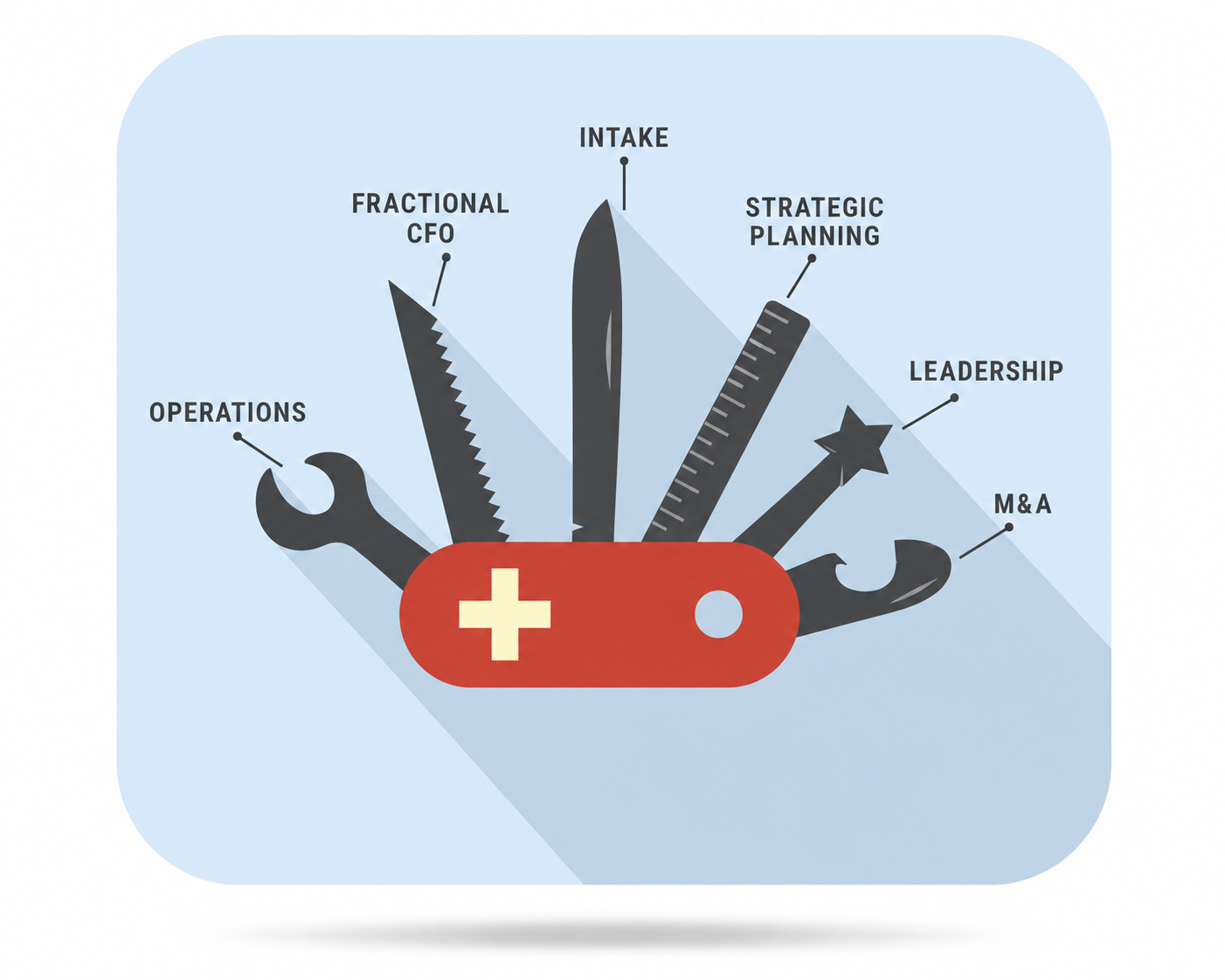
Here is what I want you to take away from all of this. Vista has not changed what we believe makes a great firm. We have been preaching operational maturity, leadership depth, data integrity, and business discipline for over 15 years. We were saying it when it was just good advice. We are still saying it now that there is capital on the line.
The firms that did the unglamorous work (documenting processes, building real management teams, cleaning up their reporting, holding people accountable) are the firms that are positioned well right now. Not because they were preparing for PE. Because they were committed to running excellent organizations.
And the firms that kept putting that work off? Well. The urgency just got a lot more real.
Whether you are entertaining an acquisition conversation, exploring an MSO structure, or simply trying to build a firm that does not depend entirely on you, the path forward looks the same:
The capital is here. The scrutiny is real. And the good news...genuinely good news...is that everything that makes a firm attractive to an outside investor also makes it a better, more profitable, more sustainable firm to run.
We have been helping plaintiff PI firms get there for a long time. If you are not sure where your firm stands, let us talk. A Vista assessment will tell you exactly where the gaps are, and yes, some of it might make you uncomfortable. That means we are doing our job.