
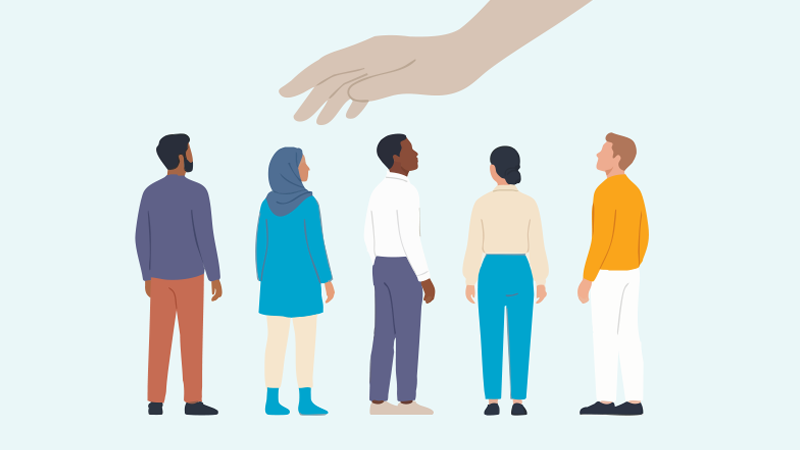
At any given moment, someone on your team is carrying something you know absolutely nothing about. A loss. A sick parent. A struggling child. A health scare. A relationship ending. Financial pressure. Caregiving responsibilities. The emotional residue of a world that feels like it is always asking people to absorb one more hard thing and keep moving.
Most people don’t raise their hand and ask for help when life becomes heavy. They continue to show up. Continue to try to meet expectations. Continue to try to do their best. Yet over time, signs begin to emerge that something has changed. A little less focus. A little less energy. A slower response time. A missed detail from someone who rarely misses details. A normally steady team member who seems distracted, more reserved, or less motivated than usual.
Because workplaces are busy, especially law firms, those signs are often overlooked until they become frustrating. That is where leaders have a choice.
That distinction matters.
A difficult chapter is not the same thing as a permanent decline. A hard stretch is not the same thing as a lack of commitment. And a person who needs support is not necessarily asking for special treatment. They may simply be trying to keep showing up while they work their way back to themselves.
Workplaces often operate as though personal struggles are rare interruptions. In reality, they are part of the normal human experience. People are building careers while navigating grief, family pressure, health concerns, personal change, uncertainty, and the everyday weight of being human in a world that rarely slows down.
In plaintiff law firms, this reality is even more complex. The work itself is personal. Teams are supporting clients who are injured, scared, frustrated, or waiting for answers that affect their lives. Intake teams hear difficult stories every day. Case managers and paralegals carry details that matter. Attorneys manage strategy, deadlines, expectations, and outcomes. Leaders are trying to grow the business while protecting the culture. So, when someone on the team is carrying something outside of work, they are not doing so in a neutral environment. They are carrying it while continuing to serve people who are also going through hard things. That does not mean the work is impossible. It means the workplace needs enough structure and humanity to support people through reality, not just through ideal circumstances.
I’ve noticed that many high performers become experts at carrying difficult things without letting anyone know they’re struggling. They do not want to disappoint anyone. They do not want leaders to question their reliability. They do not want teammates to think they are getting special treatment. They do not want to be perceived as too sensitive, too emotional, or too needy. They do not want to become the person everyone has to work around. So, they compensate. They push through. They answer the emails. They join the meetings. They smile when they can. They keep saying yes because saying no feels like proof that they are slipping. Until eventually, the effort it takes to look fine becomes another thing they have to carry.
That is why leaders cannot only rely on obvious warning signs. The people who need support may not be the ones asking for it. They may be the ones trying hardest not to need it.
The difficult part for leaders is that businesses operate on deadlines while people recover on timelines that are rarely predictable. A client still needs a call back. A pleading still needs to be filed. A case still needs movement. The firm cannot stop functioning because someone is in a hard chapter. A temporary change in focus, energy, or capacity does not automatically reflect a lack of commitment, capability, or potential.
There is a difference between reacting to a temporary struggle and evaluating someone's overall contribution. Strong leadership lives in that difference. The goal is not to lower expectations, but to provide enough structure and support for people to successfully work their way through difficult periods.
Supporting someone through a difficult chapter does not require abandoning expectations, just as maintaining expectations does not require ignoring what someone may be carrying. The best leaders know how to create a bridge between the two. They help the person identify what must continue, what can wait, what can be delegated, and what should not be added right now. That is not lowering the bar. That is helping someone regain enough footing to clear the bar again.
If you are the person struggling to focus, it can be tempting to prove you are okay by taking on more. You may feel pressure to be extra responsive, extra agreeable, extra helpful, or extra available so no one questions your commitment. But presence is not proven by overload.
Sometimes the most professional thing you can do is protect the work that matters most by not taking on more than you can responsibly carry. That might sound like: “I want to be helpful, and I want to do this well. I cannot take on that additional item right now without risking the priorities already on my plate. Can we revisit it next week or identify someone else who has capacity?” That is not weakness. That is honesty. That is quality control. That is someone who still cares about doing good work and is self-aware enough to protect it.
If you're carrying something heavy right now, here are a few things to keep in mind:
If you are leading someone through a difficult chapter, your role is not to have all the answers, remove every obstacle, or take on their work. Your role is to help create enough clarity and stability that they can stay connected to meaningful work while they find their footing again.
That starts with a different kind of conversation. A leader should absolutely address noticeable changes in performance, focus, or engagement. Approaching that conversation with curiosity rather than assumptions will create space for understanding before deciding next steps.
The conversation may begin with, "I've noticed some changes lately. Is there anything going on that is impacting your ability to focus or perform at your usual level?" It can then shift to, "What structure would help you stay connected to the priorities that matter most right now?"
Often, a few temporary adjustments are enough to help someone regain stability and momentum. A weekly priority check-in. A temporary pause on new assignments. Fewer meetings. Reassigned secondary tasks. This kind of leadership does not require lowering standards. It requires making expectations realistic and achievable. It also requires patience. Not unlimited patience without accountability, but patient leadership that understands the difference between a person avoiding responsibility and a person rebuilding capacity.
A strong team member doesn’t need you to carry the weight for them. They may need you to stop adding weight while they learn how to carry this one differently.
The middle is the hardest place to be. That in-between space where you are still functioning but not fully yourself. Still committed but not fully focused. Still capable, but more easily tired. It is also the place where people can become discouraged. Progress can feel slow. Motivation can feel inconsistent.
For leaders, the goal is not to carry someone indefinitely. It is to create enough support, structure, and clarity for them to continue moving forward while working through a difficult chapter.
For the individual, the responsibility is to remain engaged and participate in that process. Recovery may not happen on a predictable timeline, but progress still requires your commitment to keep moving forward.
The middle is not where people are meant to stay. It is where they regain their footing, rebuild confidence, and begin rediscovering their momentum. And more often than not, it is where the foundation for the comeback is quietly being built.
At Vista, so much of the work we do with firms comes back to clarity, accountability, structure, and communication. We talk about roles, workflows, leadership habits, reporting, expectations, training, and the systems that help firms grow without relying on constant heroics. This conversation belongs in that work, too.
A firm with strong operations is better equipped to support people during hard chapters because the work is not dependent on everyone pretending to be fine all the time. Priorities are clearer. Responsibilities are documented. Communication is more disciplined. Leaders have better visibility into workloads. Team members understand how to ask for help before a small issue becomes a larger problem.
Strong operations do not remove hardship from people's lives. But they do make it easier for firms to respond with clarity instead of chaos, and with compassion instead of assumption. That matters because law firms are built by people. Not job titles. Not software systems. Not dashboards. People. And people will, at some point, carry things that affect how they show up. The healthiest firms do not pretend otherwise. They prepare for it by creating cultures where accountability and humanity can exist in the same room.
The goal is not to wait until everything feels normal again before moving forward. It is to keep moving forward, even if the steps look different than they did before. If you are carrying something heavy right now, remember that where you are today is not where you will always be. Focus on the next priority. The next conversation. The next commitment. Keep showing up, even when it feels harder than usual.
If you are leading someone through a difficult chapter, remember that support and accountability are not competing priorities. With the right balance of both, people are often capable of far more than they realize. Difficult chapters eventually pass. What remains is how we responded to them, what we learned from them, and the momentum we build along the way.